Filipka
The PeasantsFilipka is one of Lipce’s poorest women, a laboring mother whose recurring crises reveal the human cost of the village’s winter scarcity and unequal distribution of help. She has almost nothing to fall back on: hunger threatens her children, work is uncertain, and the loss of a single animal can put the household’s survival until harvest at risk. Her story does not turn on a dramatic rise or rescue. Instead, each appearance makes visible how narrow the margin is between hardship and catastrophe for the village poor.
Poverty and household precarity
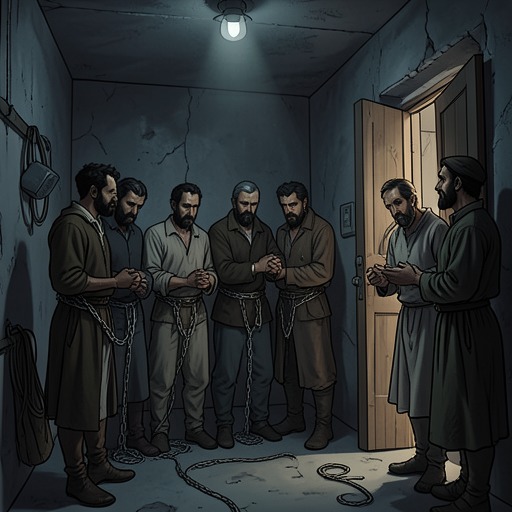
A report of Filipka’s distress begins with her eldest daughter near death. The cottage is cold; straw stuffs the windows, the family has only one bed, and the others huddle together in bedding. There are no potatoes left, and the household has sold its quilt. The family must beg the miller for each quart of groats, while creditors and neighbors will not lend until harvest. The account also says that Filip is in prison with the other men, adding to a household crisis already marked by hunger and the absence of dependable support.
These particulars place Filipka’s need within a wider village emergency. In the hard winter, potatoes have frozen in some households, money is not coming in, and the hoped-for work of felling timber at Wolf’s Hollow has not materialized. The Squire has reportedly refused to employ men from Lipce after a complaint was lodged against him. The village discussion describes hired hands facing a preharvest season of acute want, with some families eating a hot meal only once a day. This is the economic landscape in which Filipka’s household must find food and work; her poverty is not presented as an isolated misfortune.
Work, food, and conditional aid
Filipka comes to Hanka for potatoes while Hanka is in labor. The request is not for money: Filipka has no coin and offers work in exchange. Hanka allows her to take a bushel to eat immediately, but says that any further measure must wait until after planting, when the remaining supply will be clearer. She leaves Józka to measure the potatoes when she returns. The exchange offers immediate relief, but its limits are plain: Hanka must ration what she can spare, and Filipka’s access to food depends on labor despite her weakness.
The surrounding account describes Filipka as growing thinner and links that decline to too little food and sleep, as well as the repeated demands of childbearing. The scene brings domestic work and bodily depletion into the same frame. Filipka’s need is not simply a lack of cash that can be solved by a purchase; she has no money to buy food, must seek it through labor, and is already worn down by scarcity. The bushel is practical help, but it cannot remove the conditions that make each meal uncertain.
The stolen sow and the fear of losing everything
When thefts spread through the area, village watch arrangements do not protect Filipka’s household. On the first night of the watches, thieves take her sow, which is about to farrow. The animal is described as her only possession and the means on which she had been counting to survive until harvest. Its loss therefore destroys more than a store of property: it removes the expected source of future animals and the household’s clearest material safeguard against hunger.
Filipka’s grief is shown in physical, public gestures. She howls and beats her head against the walls, then runs to the priest with her lament. The Parish Priest gives her a rouble out of pity and promises her a piglet from the animals not due until harvest. The response provides money and the prospect of replacing the sow, but the replacement cannot help at once, and the theft has already broken the plan by which she hoped to reach harvest. The contrast between the sow’s immediate value to Filipka and the delayed promise of a piglet makes the time scale of poverty palpable: future assistance does not feed a household now.
Relief and the village’s divisions
When neighboring villagers arrive to help with fieldwork, Filipka protests that the assistance went to the farmers, the better-off households, rather than to the poor. She weeps that no one cares for her and others like her, whom she describes as though they were plague-stricken. Her complaint gives a specific face to the difference between aid being present in the village and aid reaching those in greatest need. Work may be offered in a communal effort, yet the poorest can remain outside its benefits.
A wider criticism in the same narrative asks why farmers who live close to the poor can remain absorbed in their own concerns while leaving poverty to divine care. That criticism is not Filipka’s speech, but her circumstances give it force: she lives amid other villagers, yet repeatedly must plead for food, credit, or help. The story of the stolen sow sharpens the same contradiction. Watchmen are appointed to defend property across the village, but the first reported loss falls on a woman whose single animal is indispensable to her survival.
Narrative significance
Filipka’s appearances connect village-wide economic conflict to the daily facts of hunger: an empty potato supply, a bushel measured out, a stolen sow, and a rouble given in pity. She is not shown directing the dispute with the manor or speaking for the organized village. Rather, her episodes register what such conflicts mean at household level, where the loss of work or property can quickly become a question of food and survival. Through her, Lipce’s poverty is measured not only in general claims about hard times, but in the specific vulnerability of a mother whose resources are reduced to what she can earn, borrow, or keep until harvest.